

Fujairah unveils UAE’s first smart pollen platform linking air quality, biodiversity and health data
Platform combines artificial intelligence with local environmental records
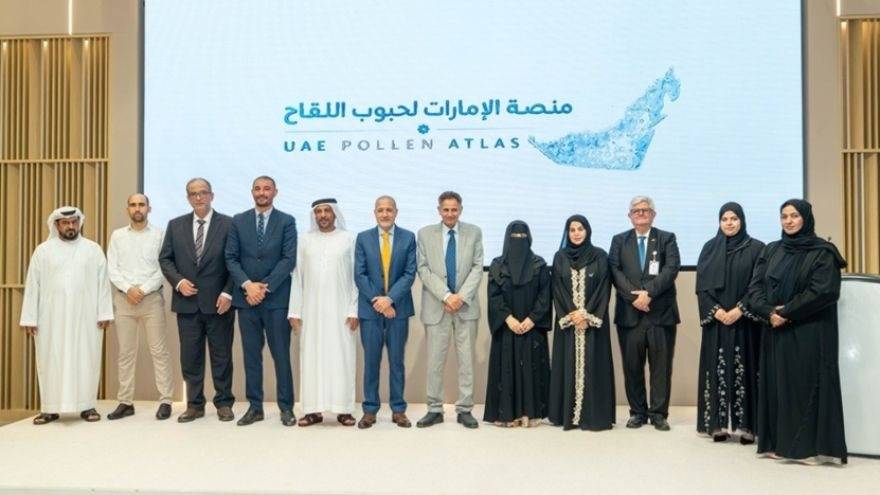
FUJAIRAH – The Fujairah Environment Authority (FEA), in collaboration with the Fujairah Research Centre (FRC), has launched the UAE Pollen Atlas Digital Platform, marking the country’s first unified digital reference system for environmental and pollen data.
The platform was unveiled during a dedicated one-day event at the Philosophy House in Fujairah, bringing together scientists, researchers and experts from leading research centres and universities across the UAE.
The launch featured panel discussions and technical workshops highlighting the platform’s advanced scientific and digital capabilities.
UAE Pollen Atlas
Moving beyond traditional pollen catalogues, the newly introduced platform functions as a long-term environmental data management ecosystem that combines scientific records, digital mapping and advanced technologies. It integrates a national pollen database, geographic information systems (GIS), airborne pollen records and live air quality indicators into a single framework designed to support environmental monitoring and research.
Powered by artificial intelligence and machine learning, the platform enables automated pollen classification through AI models trained using expert-validated imagery and local field records. The system has been developed to recognise the environmental characteristics of the UAE, allowing it to analyse pollen patterns based on regional conditions and improve accuracy through continuous data development.
Smart mapping
A key feature of the initiative is its geospatial intelligence system, which connects pollen and plant distribution data with specific locations across the UAE’s varied environments, including coastal areas, mountain regions and urban centres. Through GIS mapping, the platform combines pollen concentration records with seasonal climate trends and air quality indicators, including particulate matter levels and dust events.
This integrated approach transforms the platform from a static information source into a predictive environmental tool. It supports the creation of seasonal pollen calendars and provides a foundation for future environmental health alerts and allergy-risk mapping based on changing conditions.
The project also introduces a locally developed airborne pollen trap designed specifically for the UAE’s challenging climate. The specialised equipment has been engineered to operate in extreme heat, humidity and dusty environments, enabling reliable pollen collection from both remote areas and urban locations.
Research support
Data collected through the system feeds into an extensive microscopy library and AI-ready datasets, creating a local scientific reference base tailored to the UAE’s ecosystems. The initiative reduces reliance on imported pollen references that may not fully reflect the region’s unique environmental conditions.
The platform is expected to support research into biodiversity, respiratory health, asthma triggers and climate-related ecological changes by providing detailed insights into the relationship between air quality, weather patterns and plant life.
Aseela Abdullah Al Moalla, Director of the Fujairah Environment Authority, said the launch reflects the UAE leadership’s focus on environmental sustainability and strengthening scientific capabilities that support food security.
She added that the project represents a strategic step towards developing digital environmental infrastructure and advancing data-driven knowledge. The platform contributes to environmental protection, biodiversity conservation and scientific research while aligning with the objectives of Fujairah Strategy 2028 and the UAE National Food Security Strategy 2051.
Future insights
Dr Fouad Lamghari Ridouane, Director of the Fujairah Research Centre, described the platform as an AI-ready framework designed around the UAE’s ecological conditions. He highlighted the importance of collaboration between government entities, research centres and academic institutions in developing the system.
The platform combines advanced technology with ecological monitoring to convert environmental data into scientific insights that can support future research in climate, biodiversity and public health.